





 DayZ
 Palworld


 Enshrouded













On this pageFinding and Taming Parrots in Minecraft
Hey, you! Have you ever wondered how to befriend one of those colourful parrots flitting about in Minecraft? Well, today is your lucky day. We’re going to show you everything you need to know about parrots in Minecraft. From finding parrots in the jungle to taming them and even teaching them to dance, talk and ride on your shoulder.
Parrots were added to Minecraft in version 1.12 and can be found in jungle biomes. With their bright plumage and charming sounds, parrots make a great addition to your Minecraft animal family. But first, you’re going to have to win one over and gain its trust. Taming a parrot is easy once you know how, and they can become loyal companions to join you on adventures or just liven up your base.
So gear up, grab some seeds and let’s go on a parrot hunt. By the end of this, you’ll have a colourful new friend to call your own. The jungle awaits!
Finding and Taming Parrots in Minecraft
To tame one of these colourful creatures, you first need to find one. Parrots spawn naturally in jungle biomes, typically in groups of 1-2. Look up in the trees and you may spot a flash of red, blue or green feathers.
- Once you've found a parrot, make sure you have seeds in your inventory, such as pumpkin, melon, wheat, or beetroot seeds. Feed the parrot seeds one at a time until red hearts appear - this means it's tamed! There's a 1 in 10 chance of taming a parrot with each seed, so patience and persistence pay off.
Housing your new feathered friend
Now that you have a tamed parrot, you'll want to keep it close by. You can transport parrots on your shoulder, but they can also be kept in cages.
- To place a parrot on your shoulder, walk into it while it isn't sitting (interacting makes it sit or stand). It stays there until you jump up or drop down a block, swim, sleep or take damage. Be careful not to take damage when a parrot is on your shoulder, as it will fly off!
- There is no cage item, but you can build an enclosure from iron bars or glass and tell your parrot to sit inside it. Parrots never need feeding once tamed.
Parrots make amusing and charismatic pets in Minecraft with their squawking sounds and flamboyant plumage. Treat your feathered companion well with plenty of seeds and attention and it will reward you with its vibrant company! By following these tips, you'll have a thriving parrot population in no time.
Feeding and Breeding Parrots
Once you’ve tamed your parrot in Minecraft, it’s time to feed and breed it. Parrots can’t breed at all, and baby parrots don't exist.
- To feed parrots, offer them any kind of seed like wheat seeds, melon seeds, pumpkin seeds, or beetroot seeds. Parrots will eat seeds directly from your hand once tamed. Never feed them a cookie: it kills them.
Breeding Parrots
To breed parrots, you first need to tame two parrots and feed them seeds until they enter ‘love mode’. Their feathers will turn pink and they will face each other, kissing and dancing. At this point, you can give one parrot a spawn egg, which will produce a baby parrot.
The breeding parrots will continue mating for a few minutes after the baby spawns. Don’t spawn another baby during this time or the parents may abandon it. Also, never breed parrots that are related, as this can cause genetic issues in the babies.
Once the mating ends, the parent parrots will stop kissing and their feathers return to normal. The baby parrot will follow one of its parents for 10-15 minutes before becoming independent. Baby parrots can eat seeds and do not need to be tamed. They will become adults once they reach full size.
Breeding parrots in Minecraft allows you to produce unique colour variants and expand your parrot population. Follow these steps and with a little patience, you’ll have a whole flock of parrots in no time!
Parrot Variants in Minecraft
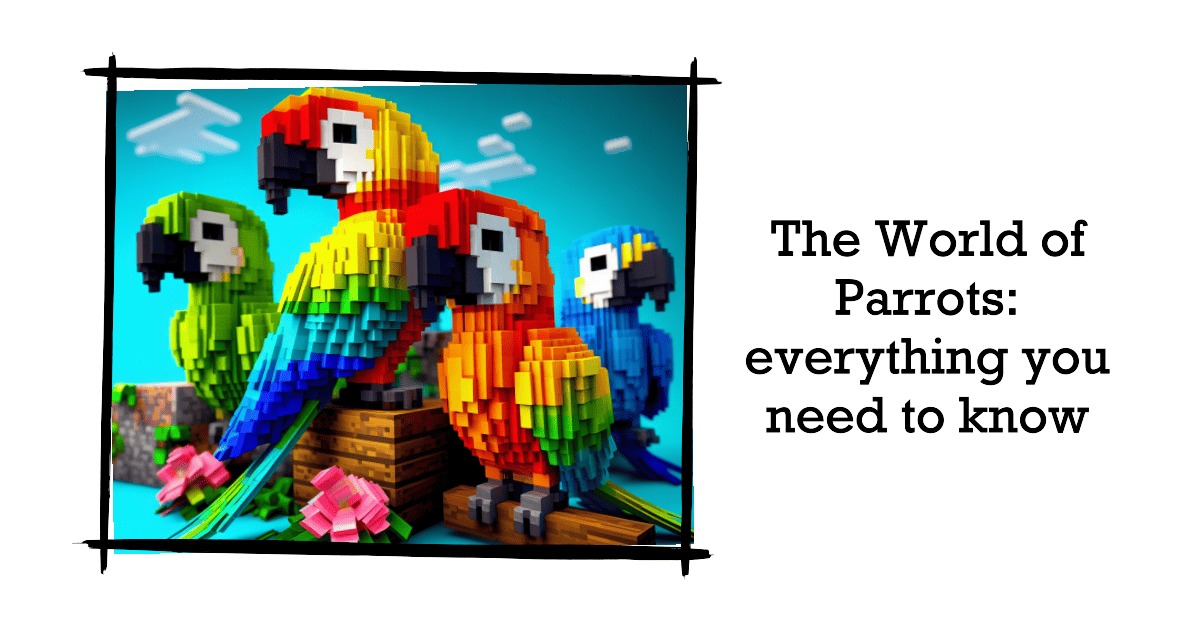
In Minecraft, there are 5 types of parrots with different colours and patterns. The parrot variants are based on real parrot species, like the Scarlet Macaw and Hyacinth Macaw.
The most common parrots in Minecraft are the red, blue, green, cyan, and grey parrots. To spawn a specific colour of parrot, you need to set the Variant Nbt tag to the corresponding number:
- Red (0): Based on the Scarlet Macaw, with red, blue and yellow feathers.
- Blue (1): Inspired by the Hyacinth Macaw, with bright blue and yellow plumage.
- Green (2): Resembles an Amazon parrot, with green feathers and a yellow head.
- Cyan (3): Has light blue-green feathers like the Eclectus parrot.
- Grey (4): Mimics the African Grey parrot with mostly grey feathers and a red tail.
To tame one of these feathered friends in Survival mode, you need to feed them wheat seeds, melon seeds, pumpkin seeds or beetroot seeds. Tamed parrots will follow you around, sit on your shoulder and even dance with you! Parrots can't be bred, so every parrot you own has to be found and tamed.
Parrots are colourful, social mobs that make a great addition to any Minecraft home or farm. Try collecting all 5 types of parrots - you'll have a veritable rainbow of birds!
Teaching Your Parrot to Dance in Minecraft
Once you’ve tamed your parrot in Minecraft, it’s time to teach it some tricks! Parrots love music in the game and will dance along to any sounds playing from a jukebox within a 3-block radius.
To get your parrot dancing, simply place a jukebox near it and put in any music disc, like Disc 11 or Disc 13. As soon as the music starts playing, your parrot will begin bobbing its head and flapping its wings to the beat. The little fella might even spin around or jump up and down if it’s really enjoying the song!
In addition to cutting a rug, parrots can also mimic the sounds of hostile and neutral mobs around them. After being exposed to the noises of creatures within a 20-block radius, your parrot may start imitating the familiar sounds of zombies groaning, spiders hissing or endermen teleporting. This parrot trick can be quite amusing, especially if it picks up on an obscure mob noise you’ve never noticed before!
Parrots can't learn new moves or sounds; their imitations are random picks from nearby monsters. Place multiple jukeboxes and music discs around its enclosure so it can boogie whenever it wants. You should also frequently travel near your parrot while different mobs are making noises so it has more opportunities to learn new sounds. With regular interaction and stimulation, your parrot will become quite the impressive entertainer!
Whether dancing to music or mimicking mob sounds, parrots in Minecraft make for a fun and quirky pet. With time and practise, you'll have the coolest parrot on the server showing off all the neat tricks you've taught it!
Other Uses for Parrots in Minecraft
Parrots in Minecraft can serve purposes beyond being a decorative shoulder companion. Here are a few other useful ways to utilise your parrots:
Alert System
Parrots will mimic the sounds of hostile mobs in the area, like creepers, zombies, and skeletons. Pay attention to the noises your parrot is making - they may be warning you of danger nearby! Their auditory alerts can help keep you safe when mining, exploring caves or fighting mobs at night.
Finding Rare Biomes
On Bedrock, parrots can also imitate a few neutral mobs such as polar bears, endermen and wolves; pandas and llamas are never imitated. If you hear your parrot making an unfamiliar noise, it could indicate you are near one of these biomes. Follow the sounds to discover the new biome and collect resources unique to that environment.
Locating Dungeons
Parrots may also mimic the sounds of mobs found in dungeons, like the moaning of zombies coming from a zombie dungeon. Their noises can lead you right to a dungeon entrance so you can defeat the mobs inside and raid the chests for loot. Pay close attention after exploring caves or mining for some time - your parrot may have discovered a dungeon for you!
Warden Warning
Since the warden arrived in 1.19, parrots can mimic its sounds. The warden produces a loud roar and stomping sounds, which your parrot will copy if the warden is nearby. Their warden impressions will alert you to the presence of this dangerous mob so you can avoid confrontation or sneak away unnoticed. The warden is not an enemy you want to face unprepared!
Parrots can serve as useful companions in Minecraft for alerting players to dangers and discovering rare features in the game environment. Put those vocal cords to work and stay safe on your mining expeditions!
Conclusion
And there you have it, everything you need to know about parrots in Minecraft. Now you're ready to find a parrot, tame it with seeds, breed it, and even teach it to mimic the sounds around you. Who knows, with some patience and care, you might end up with your very own flock of colourful companions to keep you company on your adventures. So, get our Minecraft Server Hosting service, get out there, explore the jungles, find yourself a parrot in need of a home, and make a new friend. Happy parrot hunting!